


Raising Financially Savvy Kids: Lessons That Outlast Wealth

As parents, we often work tirelessly to build wealth, save, and secure our families. We dream of leaving behind assets, land, businesses, or savings for our children. But here’s the truth: the most valuable inheritance isn’t financial.
It’s teaching your children confidence and wisdom with money.
Too many families pass down wealth without passing down the skills to manage it. That’s why we’ve all heard stories of inheritances wasted, siblings fighting over property, or money disappearing within a few years. What’s missing? Financial literacy.
Money is not just about figures in a bank account—it’s about mindset, discipline, and habits. And these are learned, most often, in the home.
Silence Isn’t Protection
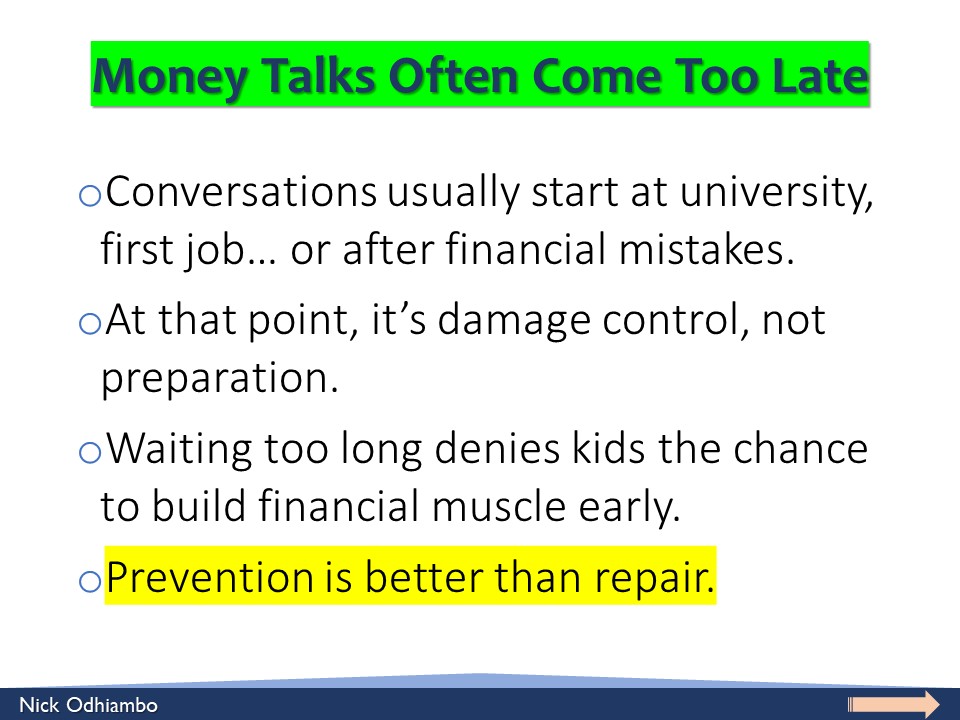
Many parents assume that shielding children from money talk protects them. “They’ll learn later,” we say. But silence doesn’t protect—it creates ignorance.
Children are always learning, whether we teach them directly or not. If they only see spending, they’ll assume money is limitless. If they only see conflict, they’ll connect money with stress. If they’re excluded from conversations, they’ll grow up unprepared.
Prevention is better than repair. It’s far easier to guide your child into healthy money habits than to fix unhealthy ones when they’re 25 and deep in debt.
Practical Ways to Raise Financially Savvy Kids
Financial literacy isn’t a one-time lesson you pick up in school. It’s built through experience, conversation, and example. Here’s how to start shaping your child’s money story today:
1. Talk through your financial choices
Don’t just make money decisions in silence—explain them.
➡ Example: “We’re saving for a holiday, so we’re skipping takeaways this month.”
➡ Or: “We bought this brand because it gives us more value for the same price.”
This shows kids that budgeting isn’t punishment—it’s about priorities. Money follows values, not just wants.
2. Let them manage real money
Give them a small amount with a purpose. It could be Ksh 200 for a school snack or Ksh 1,000 for a birthday gift. Then step back.
➡ If they blow it all on sweets, they’ll feel the consequence. That lesson sticks deeper than any lecture.
Real learning doesn’t come from theory. It comes from choices and consequences.
3. Create a simple allowance system
Introduce this simple method: Spend, Save, Give.
➡ Example: Ksh 500 pocket money → Ksh 300 Spend, Ksh 150 Save, Ksh 50 Give.
This plants seeds of delayed gratification (save), generosity (give), and independence (spend). Over time, children learn balance, not just consumption.
4. Involve them in small budgeting exercises
Turn everyday activities into money lessons.
➡ At the supermarket: “We have Ksh 1,000 for fruits. Which ones should we pick to stay within budget?”
➡ Or: “This school project will cost Ksh 300. Let’s plan how we’ll spend it.”
These simple moments show them that money is a tool for problem-solving, not just spending.
5. Talk about investing and saving
With older kids, go beyond pocket money.
➡ Show them how a savings account works.
➡ Explain compounding: “If you save Ksh 100 every week, in a year you’ll have Ksh 5,200—and the bank will add extra as interest.”
This helps them think beyond today and imagine long-term goals.
6. Let them see mistakes—and recovery
Don’t rescue them every time.
➡ If they waste their allowance on sweets, let them wait until the next week.
This is where resilience is born. The goal isn’t raising kids who are perfect with money, but kids who can recover, adjust, and keep moving.
Start the Conversation Today
Financial literacy is not just about numbers—it’s about habits, values, and choices. If you don’t teach it, the world will. And the world often teaches through painful lessons: debt, bad investments, and financial insecurity.
So, start early. Talk openly. Involve your children. Let them see you budget, save, and invest. Normalize money as a tool, not a taboo.
Because the best inheritance you can leave your children isn’t just what you leave for them…
It’s what you leave in them.
Discover more from Happy Pockets
Subscribe to get the latest posts sent to your email.