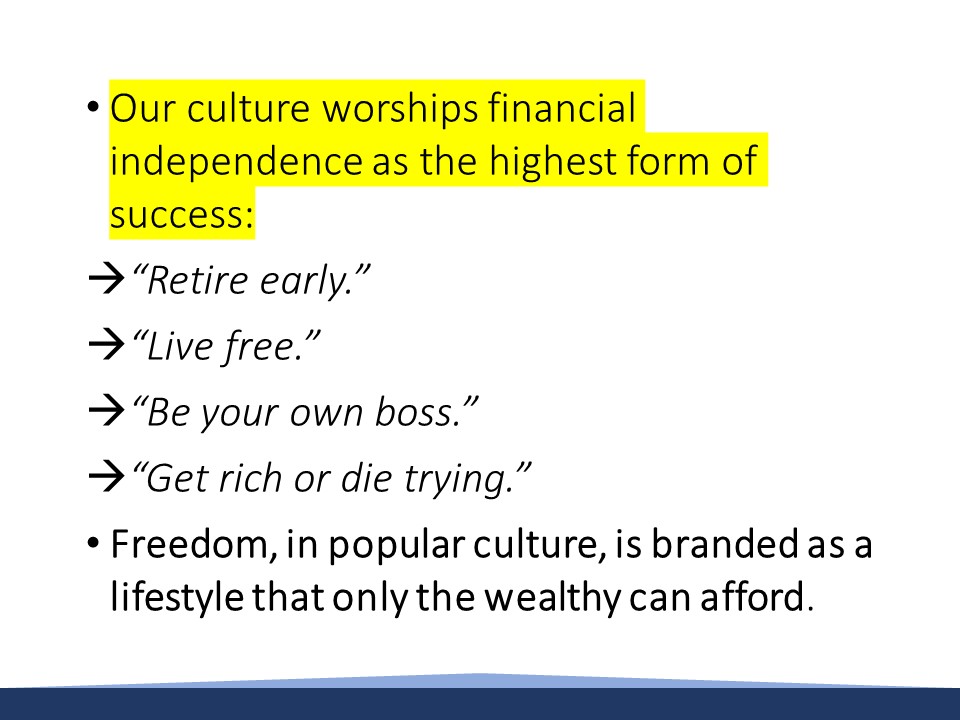
Growing up, many of us were taught — directly or indirectly — that money is freedom. Freedom to live how we want. Freedom to choose, to move, to say “no” to what we don’t want.
It sounds true. And to a degree, it is. But as Olivia Mellan reminds us in her classic book Money Harmony, when we begin to believe that money equals freedom, that’s when we lose something far more precious — our inner sense of peace.
The Birth of the Freedom Myth
This belief usually starts young. If you grew up seeing your parents struggle — working long hours, worrying about bills, fighting about money — it’s easy to internalize that lack of money equals lack of control.
As a child, you see them trapped. And you quietly promise yourself:
“When I have money, I’ll never feel trapped again.”
That vow follows you into adulthood. You chase opportunities, promotions, or even side hustles, all in pursuit of that feeling — not just of comfort, but of freedom. And yet, the more money you make, the more elusive that freedom feels.
Because freedom that depends solely on money is a moving target. It always demands a little more.
Why We Equate Money with Freedom
Mellan says that myths like this are emotionally charged — they’re not about numbers, but about unmet needs.
For many people, the “money = freedom” equation comes from:
A fear of dependence — not wanting to rely on anyone again.
A need for control — to never be at someone else’s mercy.
Or a deep longing for safety — believing money can protect you from pain or uncertainty.
But here’s the paradox: When you believe that only money can give you those things, you become enslaved by the very thing you hoped would set you free.
When Freedom Turns into a Cage
People who hold this belief often struggle to rest. They overwork, not just for ambition’s sake, but because rest feels unsafe. Every unproductive day triggers anxiety — “What if I lose control?”
Some avoid dependence so fiercely that they reject collaboration or emotional intimacy. Others fear losing money so much that they live in constant tension, unable to enjoy what they’ve earned.
And in relationships, this myth quietly destroys harmony. Couples argue about spending or control — one partner wants to save every shilling “for freedom later,” while the other spends to feel “free now.” Both are chasing freedom — but neither feels it.
The Real Cost of the Freedom Myth
The greatest danger of equating money with freedom is subtle: You begin to postpone life until later. You tell yourself, “Once I reach this amount, I’ll finally relax.” But the target keeps shifting — 10% more, 20% more, a little extra for safety.
Before long, you realize you’ve built your life around avoiding poverty, not pursuing purpose.
Freedom stops being an inner state — it becomes a financial condition. And that’s how money, quietly and politely, becomes the master.
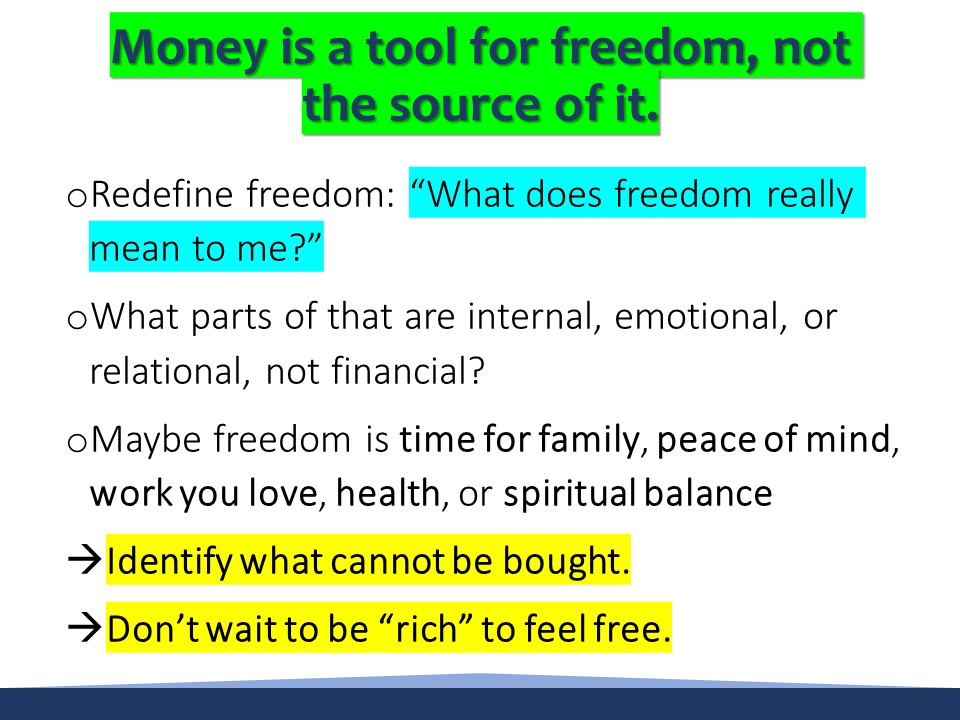
Redefining Freedom
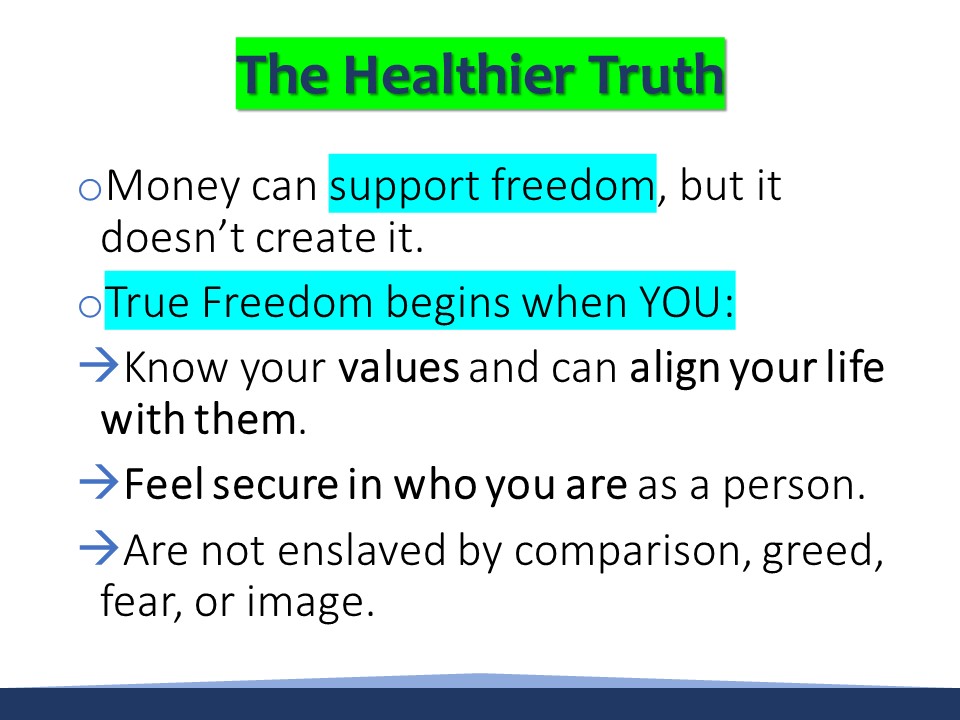
Olivia Mellan teaches that true money harmony happens when we separate emotional needs from financial tools. Money can support your freedom — but it cannot create it.
Real freedom starts inside you. It’s the ability to make choices aligned with your values. To say “no” without guilt, and “yes” without fear. To live within your means and still feel rich in meaning.
It’s peace of mind that doesn’t depend on market trends, income levels, or what others think of your lifestyle.
Mellan would say:
“Freedom isn’t about how much you have, but how consciously you use what you have.”
Practicing Freedom Today
Here are a few simple but powerful ways to break free from this myth:
Define what freedom really means for you. Is it time, peace, purpose, flexibility, health, or connection? Name it — because once you know what freedom feels like, you’ll stop chasing what only looks like it.
Find freedom in small choices. Every time you say no to unnecessary debt, or spend on what truly matters, you exercise real control.
Use money as a servant, not a master. Instead of asking, “How much do I need to be free?” ask, “How can I use what I have to live freely now?”
Balance independence with interdependence. It’s okay to receive help, collaborate, or share resources. Freedom doesn’t mean isolation — it means choice without fear.
Final Thought
Money can buy comfort. It can even create options. But freedom — the kind that fills your soul — comes from clarity, courage, and conscious living.
As Mellan writes, when we stop treating money as freedom itself, we finally become free — not just financially, but emotionally.
Discover more from Happy Pockets
Subscribe to get the latest posts sent to your email.