
How Hidden Money Myths Shape Women’s Financial Confidence

When it comes to money, many women carry stories that didn’t start with them.
Stories whispered in childhood, modeled in homes, reinforced by culture, and silently passed down from one generation to another.
Many women have been taught—directly or subtly—that money is complicated, dangerous, or selfish.
Let’s explore some of these myths, what they reveal, and how to rewrite them.
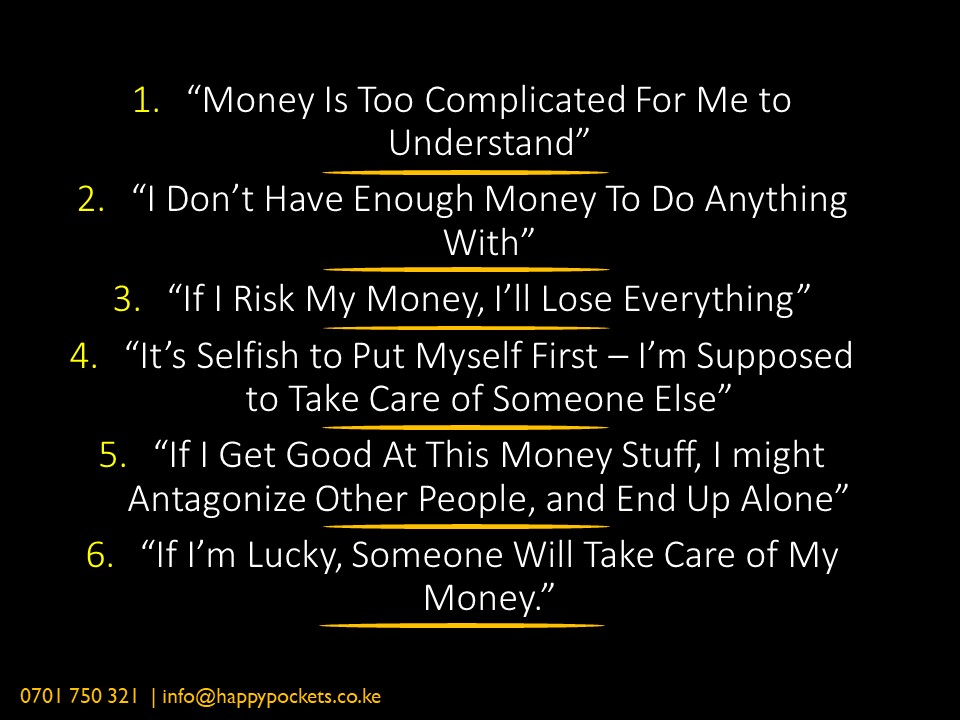
1️⃣ “Money is too complicated for me to understand.”
“Learning about money is tedious and boring.”
This myth is rooted in generations of cultural conditioning.
For centuries, women were told their place was in the home, not in the boardroom or the bank.
Even today, women who are smart and capable in every other area often say, “I’m just not good with numbers.”
But the truth is: money isn’t a math problem — it’s a life skill.
And once women realize that managing money is more about values and choices than about formulas, they begin to reclaim their confidence.
💬 Freedom step: Start by managing what you have, not what you wish you had. Every decision — even how you spend KSh 500 — is a financial decision.
2️⃣ “I don’t have enough money to do anything with.”
This myth keeps women from starting.
It says: “Until I earn more, there’s no point in saving, budgeting, or investing.”
But this belief masks fear — fear of beginning, fear of mistakes, fear of facing one’s financial reality.
The truth is, you can always begin with what you have.
Even saving small amounts or learning basic financial principles shifts your sense of power from helplessness to control.
💬 Freedom step: Money management isn’t about amounts — it’s about awareness. Start where you are.
3️⃣ “If I risk my money, I’ll lose everything.”
This is one of the strongest emotional barriers women face.
Many have seen relatives or friends lose money in bad investments, or have grown up in environments where security felt fragile.
So they protect what they have — even if that means never growing it.
This is called “security paralysis.”
It’s the belief that safety lies only in holding on — but ironically, avoiding all risk can mean losing long-term opportunities.
💬 Freedom step: Redefine risk. Learn before you leap. Emotional safety and financial growth can coexist.
4️⃣ “I don’t have enough time to manage my money well.”
This myth often hides guilt or avoidance.
Women, especially those balancing work, home, and caregiving, feel pulled in many directions.
But time is rarely the true problem — it’s emotional bandwidth.
Money feels uncomfortable, so it gets pushed to “later.”
The result? Missed opportunities, untracked spending, or financial anxiety.
💬 Freedom step: Set a “money date” — 30 minutes weekly to review, plan, and reflect. Consistency builds clarity.
5️⃣ “It’s selfish to put myself first — I’m supposed to take care of everyone else.”
This myth has deep emotional roots in women’s identity as nurturers.
Many women grow up equating self-worth with self-sacrifice.
So saving for themselves, spending on self-care, or pursuing financial goals can feel “selfish.”
Remember, “You can’t pour from an empty purse.”
When a woman is financially strong, her capacity to care expands — not contracts.
Empowered women uplift families and communities.
💬 Freedom step: Self-care includes financial care. Your stability is a gift to those you love.
6️⃣ “If I get too good with money, I might antagonize my partner — or end up alone.”
This myth reveals a powerful internal conflict:
“If I become confident with money, will I intimidate others?”
Some women unconsciously associate financial competence with rejection.
They fear success will cost them love or belonging.
But real partnership — personal or professional — grows stronger when both parties bring confidence and clarity to the table.
💬 Freedom step: True love and friendship aren’t threatened by your power. They’re strengthened by it.
7️⃣ “If I’m lucky, someone else will take care of my money.”
This one blends wishful thinking with cultural messaging.
For generations, women were expected to marry “security” rather than create it.
Even today, some subconsciously wait for rescue — a husband, a job, an inheritance, or a lucky break.
But depending on someone else for financial safety isn’t security — it’s dependency.
Women should view money as a form of self-respect, not luck.
💬 Freedom step: No one will ever care about your financial future as much as you do. Take the wheel.
💎 Final Thought
Olivia Mellan’s message remains radical in its simplicity:
“Money is not about greed or guilt. It’s about power — and how you use it.”
Women don’t need permission to handle money confidently.
They only need to challenge the old stories that keep them small.
Because the truth is — financial wellness isn’t about becoming someone else.
It’s about becoming fully yourself.
Discover more from Happy Pockets
Subscribe to get the latest posts sent to your email.