
Inflation: The Silent Force Behind Financial Decisions
Inflation may seem like a simple concept, but its effects on savings and investments can be profound.
So, what is inflation?
Inflation is when the prices of things we need, like bread, go up over time. For example, if a loaf of bread costs 90 bob today, and next year it costs 110 bob, that’s inflation. It means our money can’t buy as much as it used to.
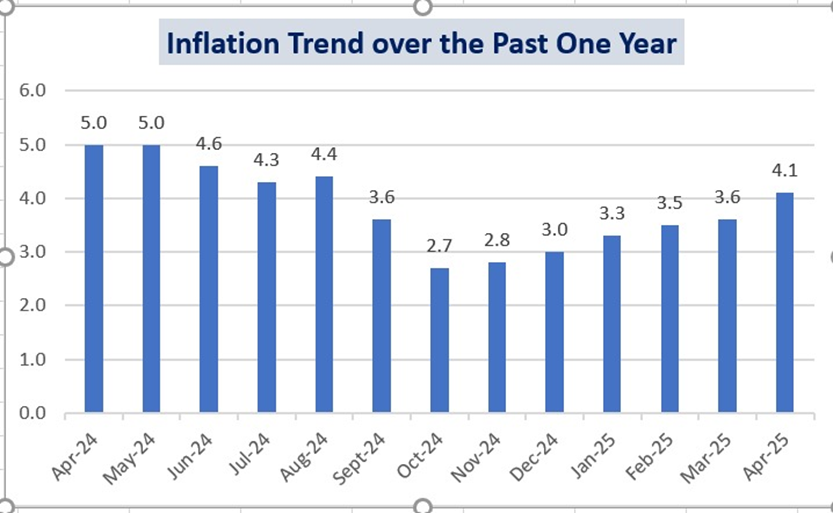
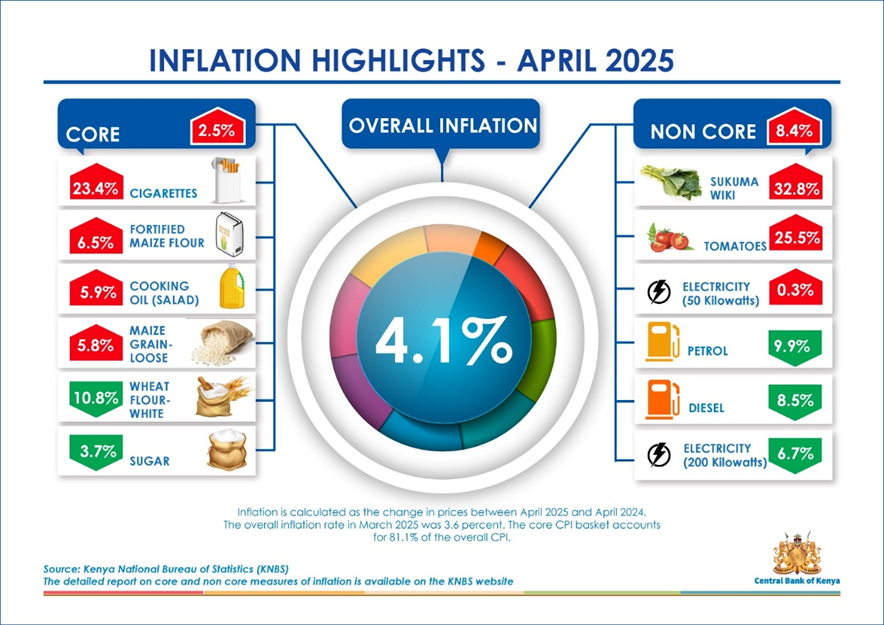
With inflation, the value of my Ksh 100 remains the same physically, but its purchasing power diminishes. This means it can only buy a fraction of the items and services it could before. In Kenya, the inflation rate has been steadily rising since November 2024.
What does this mean for us?
This means that prices of goods and services are increasing faster than before, and money is losing value at a faster rate.
What about in Investments and Savings?
Given the current inflation rate of 4.1%, our savings or investments must earn interest higher than this rate. If not, the purchasing power of our capital will diminish over time. Instead of my Ksh. 2000 buying 2 liters of cooking oil, bread, 4 packets of milk, and maybe maize flour, it will only buy 4 packets of milk, bread, and 2kg of maize flour in the coming years. I will be forced to forgo the 2 liters of cooking oil.
What if my investment earns an interest of 6%?
It means I will beat inflation by only 1.9%, which we call the real interest. Real interest is the return on an investment after adjusting for inflation. In this case, it’s the 6% interest on my investment minus the 4.1% inflation rate, giving me a real interest of 1.9%.
What about 12%?
This means that I will beat inflation by 7.9%. So, as we choose our investments, be cognizant of inflation and real interest. Always choose an investment or a savings account that promises a higher interest rate because you will thrive during inflation.
Discover more from Happy Pockets
Subscribe to get the latest posts sent to your email.